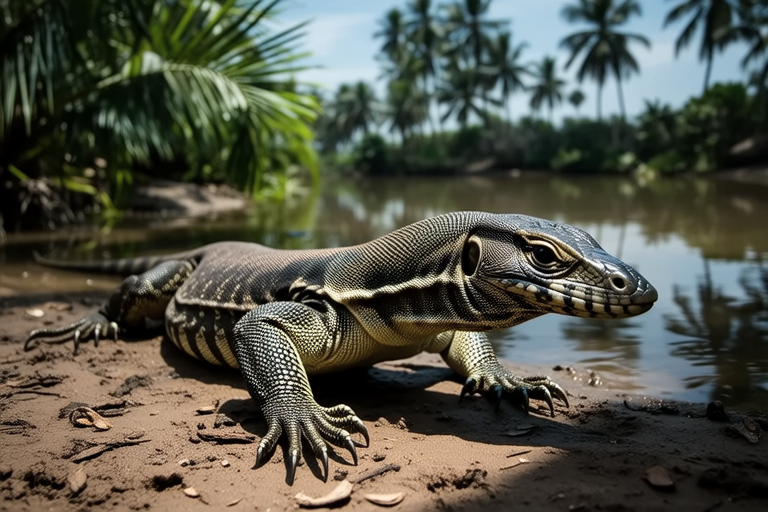
Adventures with a Water Monitor: A Journey into the Heart of Its Habitat
The sun was just beginning to rise over the lush greenery of the tropical forest when I first caught sight of it. The water monitor (Varanus salvator) glided effortlessly through the murky waters of the river, its sleek body cutting through the surface with barely a ripple. This encounter marked the beginning of an unforgettable journey into the heart of its habitat, a journey that would reveal the fascinating world of one of the largest lizards on Earth.
Encountering the Water Monitor
My first few days in the dense jungle were filled with anticipation as I set up my camp near the riverbank. I knew that the water monitor was elusive and shy, so I had to be patient and observant. The first time I saw one was by chance; it was basking on a rock, its long tail draped over the edge. Its dark brown scales glistened in the morning light, and its sharp eyes scanned the surroundings for potential threats or prey.
Water monitors are highly adaptable reptiles, thriving in both freshwater and saltwater environments. They are often found near rivers, lakes, and mangroves, where they can hunt for fish, crustaceans, and small mammals. Their strong limbs and powerful tails make them excellent swimmers, and they can dive deep to catch their prey. I was amazed at how gracefully it moved through the water, disappearing beneath the surface only to reappear moments later with a fish in its jaws.
Behavior and Diet
Observing the water monitor’s behavior was one of the most rewarding aspects of my journey. These creatures are primarily diurnal, meaning they are most active during the day. They spend much of their time basking in the sun to regulate their body temperature, which is crucial for their metabolism. When not basking, they are busy hunting, scavenging, or exploring their territory.
Their diet is diverse and includes fish, amphibians, insects, birds, and even small mammals. One memorable instance occurred when I witnessed a water monitor catching a bird. It had been lurking near the nest of a heron, patiently waiting for the right moment. As soon as the young bird emerged from the nest, the monitor lunged forward with incredible speed, seizing the bird in its jaws. The agility and precision of the attack left me in awe.
Habitat Preferences
Water monitors prefer habitats with abundant food sources and suitable basking spots. They are particularly fond of areas with dense vegetation, which provides them with cover and protection from predators. Mangrove forests are ideal for them because they offer both aquatic and terrestrial environments. The intertwining roots of the mangrove trees create a labyrinth of tunnels and crevices where the monitors can hide or rest.
During my stay, I noticed that the monitors were especially active after heavy rainfall. The rain would flush out small animals and insects from their hiding places, making it easier for the monitors to find food. They would emerge from their burrows and scurry along the ground, sniffing the air for any signs of prey. Their keen sense of smell allows them to detect carrion from great distances, making them efficient scavengers as well.
Challenges of Observation
Observing water monitors in their natural habitat presented several challenges. For one, they are incredibly fast and can disappear into the underbrush in an instant. Patience and stealth were key to getting close enough for detailed observation. Another challenge was the unpredictable weather, which could change from sunny to stormy in a matter of hours. Heavy rains often washed away tracks and scents, making it difficult to follow the monitors’ movements.
Despite these challenges, I managed to gather valuable insights into their behavior and habits. One of the most interesting discoveries was their social interactions. While generally solitary, water monitors have been observed engaging in dominance displays, particularly during mating season. Males will often fight each other, using their powerful tails and sharp claws to assert dominance. These displays are both fascinating and dangerous to witness up close.
Importance in Ecosystem
Water monitors play a vital role in their ecosystem. As apex predators, they help control the populations of smaller animals, ensuring a balanced ecosystem. Their scavenging behavior also aids in nutrient recycling, as they consume dead animals and spread their remains throughout the environment. Additionally, their burrowing activities help aerate the soil, promoting plant growth.
The presence of water monitors is a good indicator of a healthy ecosystem. If their numbers decline, it may signal problems within the food chain or habitat degradation. Conservation efforts are therefore crucial to protect these remarkable creatures and the ecosystems they inhabit.
Conservation Efforts
Unfortunately, water monitors face numerous threats, including habitat destruction, illegal hunting, and the pet trade. Deforestation and agricultural expansion have led to the loss of many of their natural habitats, forcing them into smaller and more fragmented areas. Illegal hunting for their meat and skin continues to pose a significant threat, particularly in Southeast Asia, where they are considered a delicacy.
Several organizations are working tirelessly to conserve water monitors and their habitats. Initiatives include habitat restoration projects, anti-poaching patrols, and public awareness campaigns. Education plays a crucial role in changing attitudes towards these creatures and encouraging sustainable practices. By supporting these efforts, we can help ensure the survival of water monitors for future generations.
Conclusion
My journey into the heart of the water monitor’s habitat was an eye-opening experience that deepened my appreciation for these remarkable creatures. Their adaptability, intelligence, and importance in their ecosystem make them truly fascinating subjects of study. Through careful observation and conservation efforts, we can continue to learn from and protect these magnificent reptiles.
As I packed up my gear and prepared to leave, I took one last look at the river, hoping to catch another glimpse of the water monitor. In that moment, I realized that while my adventure had come to an end, the story of the water monitor was far from over. Their continued existence and survival depend on our commitment to preserving their habitats and raising awareness about their importance.
