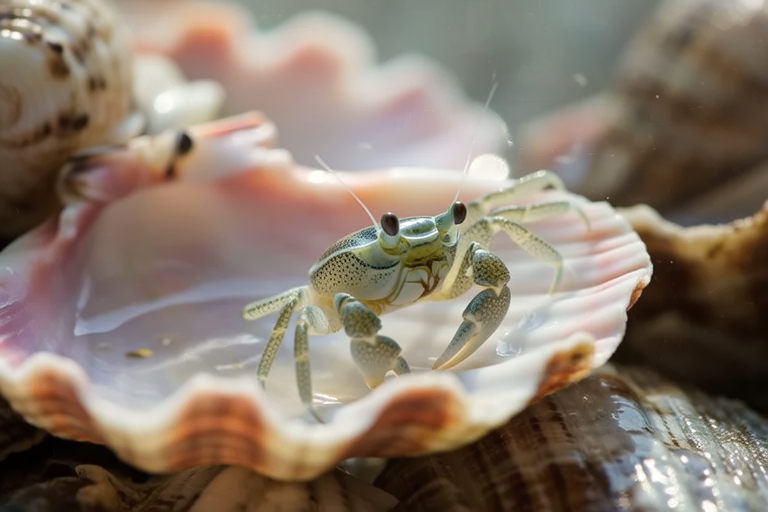
Hidden Heroes: How Pea Crabs Thrive Inside Their Hosts
In the vast and mysterious world of marine biology, there exists a fascinating symbiotic relationship that often goes unnoticed by casual observers. Pea crabs, small crustaceans with a unique lifestyle, live inside the bodies of other marine creatures, such as sponges, sea cucumbers, and bivalves. This intimate association has been evolving over millions of years, creating a complex web of interactions that benefit both parties. These tiny crustaceans, often overlooked, are true hidden heroes in marine ecosystems, playing crucial roles in maintaining the balance of their habitats.
The Symbiotic Relationship
The symbiosis between pea crabs and their hosts is a classic example of mutualism, where both species benefit from the relationship. For pea crabs, the host provides a safe, protected environment and a steady supply of nutrients. In return, the crabs offer protection and cleaning services to their hosts. This partnership is so finely tuned that it has allowed both species to thrive in challenging marine environments.
Biology of Pea Crabs
Pea crabs, belonging to the family Pinnotheridae, are small, soft-bodied crustaceans that have evolved specialized adaptations to live within their hosts. Their flattened, oval-shaped bodies are perfectly suited for maneuvering through the narrow spaces within their hosts. Unlike their free-swimming relatives, pea crabs have reduced or absent swimming appendages, making them more adept at crawling and burrowing within their hosts.
Their exoskeleton is thin and flexible, allowing them to fit snugly within the body cavities of their hosts without causing undue stress. Additionally, pea crabs possess highly developed sensory organs, enabling them to detect changes in their environment and respond accordingly. These adaptations highlight the remarkable evolutionary journey of pea crabs, which have successfully adapted to their unique lifestyle.
Host Environments and Challenges
Pea crabs inhabit a variety of marine environments, including sponges, sea cucumbers, and bivalves like clams and oysters. Each host presents its own set of challenges for the pea crabs, requiring different survival strategies.
Within sponges, pea crabs face the challenge of navigating the intricate network of channels and chambers. They must be careful not to get trapped or injured while searching for food or mating partners. Sea cucumbers, on the other hand, pose the threat of being expelled if the crab is not careful. Pea crabs that reside within bivalves, such as clams and oysters, face competition for space and resources from other organisms that also seek refuge within these mollusks.
To overcome these challenges, pea crabs have developed sophisticated behaviors. For instance, they may alter their feeding habits or timing to avoid conflict with other inhabitants of the host. Some pea crabs even secrete substances that can deter predators or competitors, ensuring their safety and well-being within their host environments.
Reproduction and Life Cycle
The reproductive cycle of pea crabs is closely tied to their host’s lifecycle, ensuring the continuation of the symbiotic relationship. Female pea crabs lay eggs within the protective confines of their host, providing a safe environment for the developing embryos. Once hatched, the larvae disperse into the surrounding water, where they search for suitable hosts to continue their life cycle.
Male pea crabs play a critical role in the reproductive process, often engaging in elaborate courtship rituals to attract females. These rituals can include displays of strength, coloration, or behavior, ensuring the best genetic match for offspring. After successful mating, the female carries fertilized eggs until they hatch, at which point the young crabs must find new hosts to survive.
Ecological Significance
Despite their small size, pea crabs play a significant role in marine ecosystems. By cleaning and protecting their hosts, they contribute to the overall health and vitality of these organisms. Additionally, pea crabs serve as a food source for larger predators, helping to maintain the balance of marine food webs. Their presence can also indicate the health of their host populations, acting as an early warning system for environmental changes.
Moreover, the study of pea crabs and their symbiotic relationships offers valuable insights into the complex dynamics of marine ecosystems. Understanding these interactions can help researchers develop conservation strategies to protect vulnerable species and maintain the delicate balance of marine environments.
As we continue to explore the mysteries of the ocean, it is essential to recognize the importance of these hidden heroes. Pea crabs, with their unique adaptations and vital roles, remind us of the intricate and interconnected nature of life in the sea. By studying and preserving these relationships, we can ensure the continued health and diversity of our marine ecosystems for generations to come.
