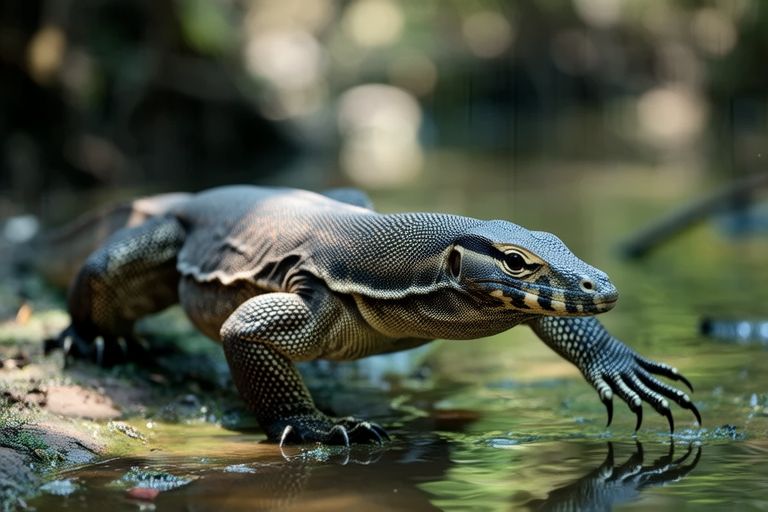
Top 10 Fascinating Facts About the Water Monitor You Need to Know
The water monitor (Varanus salvator) is one of the largest lizards in the world, captivating both amateur enthusiasts and seasoned herpetologists with its impressive size, versatile behavior, and unique adaptations. Found primarily in Southeast Asia, these reptiles have adapted to thrive in various environments, from dense tropical forests to coastal mangroves and freshwater habitats. This article delves into ten fascinating facts about the water monitor, offering insights into its habitat, diet, behavior, physical characteristics, and ecological significance.
1. Adept Swimmers with a Love for Aquatic Environments
Water monitors are exceptionally skilled swimmers, spending much of their time in or near water. Their streamlined bodies, powerful tails, and webbed feet make them efficient navigators through aquatic environments. They can remain submerged for up to 30 minutes, allowing them to hunt fish, crustaceans, and amphibians with ease. This adaptation is crucial for their survival, as it enables them to access food sources that terrestrial predators might miss.
2. Versatile Diet: From Insects to Large Prey
The water monitor’s diet is incredibly diverse, ranging from insects and small mammals to birds, eggs, and even other reptiles. They are opportunistic feeders, meaning they will eat whatever prey is available. Their sharp teeth and strong jaws allow them to tackle larger animals, while their agile tongues help detect chemical signals in the air, guiding them towards potential meals. This adaptability ensures that water monitors can survive in various ecosystems where food sources may fluctuate.
3. Size Matters: The Largest Lizards in Asia
Water monitors are among the largest lizards globally, with males often reaching lengths of up to 3 meters and weighing over 50 kilograms. Females are generally smaller but still formidable. Their robust build and impressive size deter many predators, making them apex predators in their habitats. Despite their intimidating appearance, water monitors are known for their agility and speed, which they use to escape threats or catch elusive prey.
4. Complex Social Structure and Communication
Contrary to popular belief, water monitors exhibit complex social behaviors. They communicate through a range of vocalizations, body postures, and chemical signals. These interactions play a vital role in establishing dominance hierarchies, mating rituals, and territorial boundaries. Males are particularly aggressive during breeding season, engaging in fierce battles to secure mates. Understanding these behaviors offers valuable insights into the lizard’s social dynamics and evolutionary strategies.
5. Unique Adaptations for Survival
Water monitors possess several unique adaptations that enhance their survival in challenging environments. Their nostrils are positioned high on their snouts, enabling them to breathe while partially submerged. Additionally, their keen eyesight and excellent sense of smell allow them to detect prey from considerable distances. These traits are essential for their success as hunters, ensuring they can respond quickly to potential food sources or threats.
6. Habitat Diversity: Thriving in Various Ecosystems
Water monitors are highly adaptable and can be found in a wide array of habitats, including tropical rainforests, grasslands, wetlands, and coastal areas. Their ability to traverse both land and water allows them to exploit different resources within their environment. They are particularly common in areas with abundant water bodies, such as rivers, lakes, and estuaries, where they can find shelter and food. This versatility makes them resilient against environmental changes and human encroachment.
7. Parental Care: A Rare Trait in Reptiles
While most reptiles lay eggs and leave their offspring to fend for themselves, water monitors display a level of parental care that is uncommon in their class. Females guard their nests, protecting the eggs from predators and ensuring optimal conditions for hatching. This behavior increases the chances of survival for their offspring, contributing to the species’ continued success. After hatching, juveniles remain close to their mother for several weeks, learning important survival skills.
8. Powerful Climbers and Efficient Hunters
Despite their large size, water monitors are proficient climbers, capable of scaling trees and other elevated structures. This ability gives them access to additional food sources, such as bird nests and arboreal insects. Their strong limbs and prehensile tails provide stability while climbing, allowing them to reach heights that would be inaccessible to ground-dwelling predators. This skill also aids in escaping threats by retreating to higher ground.
9. Ecological Role: Keystone Species in Asian Wetlands
Water monitors play a crucial role in maintaining the balance of their ecosystems. As apex predators, they control populations of smaller animals, preventing any single species from becoming too dominant. Their scavenging habits also contribute to nutrient cycling, enriching the soil and promoting plant growth. Moreover, their presence serves as an indicator of overall ecosystem health, as declines in water monitor populations could signal broader environmental issues.
10. Cultural Significance and Conservation Challenges
In many cultures across Southeast Asia, water monitors hold significant cultural and spiritual importance. They are often depicted in folklore and mythology, symbolizing strength, wisdom, and protection. However, despite their revered status, water monitors face numerous conservation challenges, including habitat destruction, poaching for the pet trade, and illegal hunting. Efforts to protect these magnificent creatures involve community education, habitat preservation, and stricter enforcement of wildlife laws.
Understanding the water monitor’s biology, behavior, and ecological role deepens our appreciation for this remarkable species. By recognizing their value and addressing the threats they face, we can work towards ensuring their continued existence in the wild. As apex predators and keystone species, water monitors play a critical role in maintaining healthy ecosystems, and their conservation is vital for the well-being of both wildlife and human communities.
