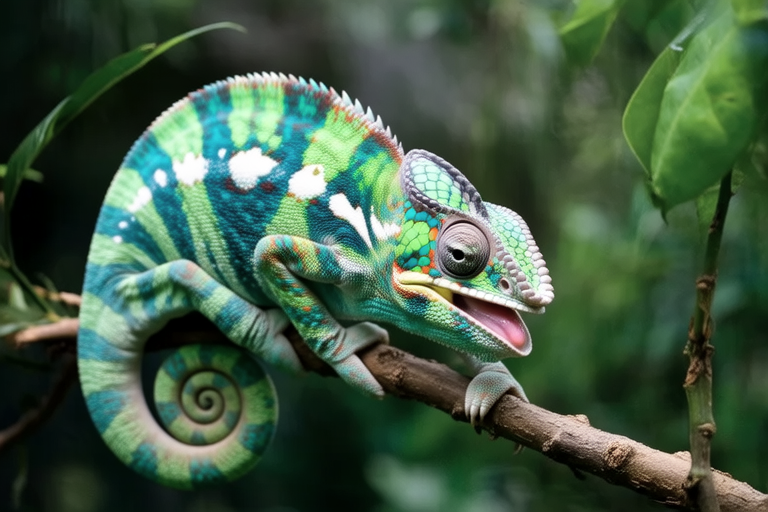
The Fascinating World of Chameleons
Chameleons are some of the most captivating creatures on Earth, known for their unique ability to change colors, their stealthy hunting techniques, and their diverse habitats. These lizards have long fascinated scientists and nature enthusiasts alike with their remarkable adaptations that enable them to thrive in a wide range of environments. This article explores the science behind their color-changing abilities, their distinctive physical features, and how these adaptations contribute to their survival. We’ll also delve into the behaviors, diets, and challenges faced by different chameleon species, as well as the importance of conservation efforts to preserve their natural habitats.
The Science Behind Color-Changing
One of the most intriguing aspects of chameleons is their ability to change colors. Unlike many animals that rely on pigments for coloration, chameleons use specialized cells called chromatophores, which contain different types of pigment. These cells can expand or contract, altering the way light is reflected off the chameleon’s skin. The result is a dazzling display of colors that can range from vibrant greens and blues to deep reds and browns.
But color-changing isn’t just about blending in with the environment; it also plays a crucial role in communication. Chameleons use their colors to signal aggression, submission, or readiness to mate. For instance, a male chameleon may display bright colors when courting a female, while darker hues might indicate stress or fear. This complex system of visual communication allows chameleons to interact with one another without the need for vocalizations.
Stealth Hunters
Chameleons are not only masters of camouflage but also exceptional hunters. Their elongated tongues, which can extend up to twice the length of their bodies, are equipped with sticky tips that allow them to catch insects with lightning speed. In fact, a chameleon’s tongue can shoot out at speeds of up to 26 body lengths per second, making it one of the fastest movements in the animal kingdom.
These reptiles have other unique adaptations that aid in their hunting prowess. Their eyes, for example, can rotate independently of one another, giving them a nearly 360-degree field of vision. This allows chameleons to spot prey even when it’s behind them or above their heads. Once they’ve locked onto a target, they can focus both eyes on the same point, providing depth perception that helps them judge distance accurately.
Diverse Habitats
Chameleons are found across much of Africa, Madagascar, southern Europe, and parts of Asia. They inhabit a variety of ecosystems, including tropical rainforests, deserts, and savannas. Some species, like the Jackson’s chameleon, prefer cooler, mountainous regions, while others, such as the panther chameleon, thrive in humid, coastal forests.
The diversity of chameleon habitats reflects their adaptability. Each species has evolved specific traits that help them survive in their particular environment. For instance, desert-dwelling chameleons often have lighter-colored scales that reflect heat and conserve moisture, while forest-dwelling species tend to be more brightly colored, allowing them to blend in with the foliage.
Distinctive Physical Features
Aside from their color-changing abilities and hunting skills, chameleons possess several other distinctive physical features. Their feet, for example, are divided into two groups of toes: one group of two toes and another of three. This arrangement allows chameleons to grip branches and stems securely, providing stability while climbing or resting. Additionally, their prehensile tails serve as an extra limb, helping them balance and move through trees with ease.
Chameleons also have long, flexible tongues and tails, which contribute to their agility and mobility. Their tails are prehensile, meaning they can grasp and hold onto objects, adding another layer of security when navigating through dense vegetation. These physical attributes, combined with their keen eyesight and precise movements, make chameleons formidable predators in their respective ecosystems.
Varieties of Species
There are over 200 recognized species of chameleons, each with its own set of characteristics and behaviors. Some of the most well-known include:
- Jackson’s Chameleon (Trioceros jacksonii): Native to Kenya and Tanzania, this species is easily recognizable by its three horns, which resemble those of a rhinoceros. It is primarily herbivorous, feeding on leaves and flowers.
- Panther Chameleon (Furcifer pardalis): Found in Madagascar, the panther chameleon is famous for its striking color patterns and is often kept as a pet due to its beauty and relatively easy care requirements.
- Veiled Chameleon (Chamaeleo calyptratus): Originating from Yemen and Saudi Arabia, the veiled chameleon is one of the largest species and is popular among reptile enthusiasts.
- Bee-eater Chameleon (Calumma vohibola): Endemic to Madagascar, this species is known for its distinctive appearance, with a crest running along its back and a tail that curls upward like a question mark.
Diet and Behavior
Chameleons are primarily insectivorous, feeding on a wide variety of bugs such as crickets, grasshoppers, and beetles. However, some species, particularly those living in areas where food is scarce, may supplement their diet with plant matter. For example, the Jackson’s chameleon has been observed eating leaves and flowers, especially during periods of drought.
In terms of behavior, chameleons are generally solitary creatures, preferring to live alone rather than in groups. They are territorial and will defend their space against intruders, sometimes engaging in displays of aggression that involve puffing up their bodies and changing colors. Mating rituals can be elaborate, with males competing for females through colorful displays and head bobbing.
Challenges in the Wild
Despite their impressive adaptations, chameleons face numerous threats in the wild. Habitat loss due to deforestation, agriculture, and urbanization is one of the biggest challenges. As humans continue to encroach upon chameleon habitats, these reptiles lose access to the resources they need to survive. Additionally, climate change poses a threat to chameleons, as shifts in temperature and precipitation patterns can disrupt their ecosystems and alter the availability of prey.
Pollution, poaching, and the illegal pet trade also contribute to the decline of chameleon populations. Many species are captured and sold as exotic pets, often under harsh conditions that lead to their death or injury. Conservationists are working to address these issues by promoting sustainable practices, protecting critical habitats, and raising awareness about the importance of preserving chameleon species.
Conservation Efforts
To combat the threats facing chameleons, numerous organizations and initiatives are dedicated to their protection. One such effort is the establishment of protected areas, where chameleons and other wildlife can live undisturbed. These reserves provide safe havens for chameleons and help maintain healthy ecosystems.
Another important aspect of conservation is education. By teaching people about the value of chameleons and their role in the ecosystem, we can foster a sense of responsibility and encourage more sustainable practices. Additionally, captive breeding programs aim to increase chameleon populations and reintroduce them into the wild, while also providing opportunities for research and learning.
Ultimately, the survival of chameleons depends on our commitment to preserving their natural environments. By supporting conservation efforts and adopting eco-friendly habits, we can ensure that future generations will have the opportunity to marvel at these incredible creatures.
