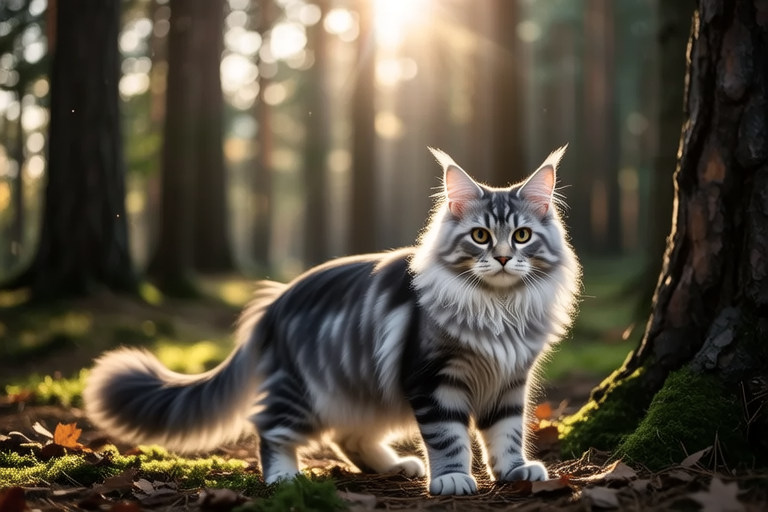
From Forests to Foyers: The Journey of Maine Coon Cats
The Maine Coon is one of the oldest natural breeds in North America, with a history that stretches back through the misty annals of time. These majestic creatures have been revered for their size, intelligence, and unique physical traits. Their story begins in the dense forests of North America, where they developed remarkable adaptations and survival skills. This article will explore the origins, evolution, and enduring appeal of the Maine Coon, tracing its journey from the wild to the warmth of our homes.
Origins in the Wild: A Tale of Survival
The exact origin of the Maine Coon remains shrouded in mystery and legend. One popular myth suggests that the breed is a descendant of longhaired cats brought over by Vikings, who interbred with local felines. Another theory posits that they are descendants of domestic cats that accompanied Marie Antoinette’s ships during her escape attempt to America. While these stories add a layer of intrigue, the most plausible explanation is that they are the result of natural selection, evolving from the robust and hardy cats that thrived in New England’s harsh climate.
Maine Coons were perfectly suited to life in the dense, cold forests of North America. Their large, muscular bodies and thick, water-resistant coats made them ideal for enduring the region’s frigid winters. Their tufted ears provided protection against the cold, while their bushy tails served as cozy blankets when curled up for sleep. These cats were not only adept at hunting but also possessed an innate curiosity that allowed them to navigate the challenging terrain of their environment.
Evolution from Wild to Domesticated Pets
The transition of Maine Coons from wild forest dwellers to beloved household pets was gradual. As settlers began to establish homes along the coast of Maine, they noticed the presence of these large, friendly cats. Recognizing their value as excellent mousers, farmers and seafarers often kept them around their properties. Over time, these cats became more accustomed to human company, eventually entering homes as cherished companions.
Their large size, typically ranging from 9 to 18 pounds for females and 13 to 25 pounds for males, sets them apart from other domestic cat breeds. Their distinctive tufted ears and waterproof coat are further evidence of their wild heritage. Maine Coons are known for their gentle nature and playful demeanor, making them ideal family pets. Despite their imposing appearance, they are generally very sociable and enjoy interacting with humans and other animals.
Historical Anecdotes and Myths
One of the most fascinating aspects of Maine Coon lore is the story of Captain Charles Coon, a ship captain who supposedly brought long-haired cats to Maine. Local sailors, amused by the felines’ antics, referred to them as “Coon’s cats,” a nickname that eventually evolved into “Maine Coon.” While this tale is likely apocryphal, it underscores the breed’s association with maritime history.
Another anecdote involves the famous writer Mark Twain, who owned a Maine Coon named Leo. In his essay “Fenimore Cooper’s Literary Offenses,” Twain humorously described Leo’s prowess as a hunter, praising the cat’s ability to catch mice with precision and grace. Such stories highlight the breed’s enduring reputation as skilled hunters and affectionate companions.
Adapting to Human Environments
As Maine Coons began to enter homes, they demonstrated a remarkable ability to adapt to new environments while retaining their unique characteristics. Their sociability and intelligence made them easy to train, and they quickly became valued members of households. Unlike many other breeds, Maine Coons tend to be quite vocal, often engaging in conversations with their owners. They are known for their playful nature and can be found playing fetch or engaging in other interactive games.
Despite their large size, Maine Coons are relatively low-maintenance compared to other long-haired breeds. Their coats require regular grooming to prevent matting, but their sturdy build and active lifestyle ensure that they remain healthy and fit. Many owners find that the breed’s calm demeanor and gentle personality make them ideal companions for families with children and other pets.
Current Popularity and Role in Families
Today, Maine Coons are among the most popular cat breeds, cherished for their striking appearance and endearing personalities. Their large size and distinctive features make them stand out in any setting, whether it’s a bustling household or a quiet apartment. Many cat enthusiasts are drawn to the breed’s wild heritage, finding it fascinating to own a pet that retains so much of its original character.
Maine Coons play a significant role in families, often serving as loyal companions and protectors. Their intelligence and problem-solving abilities make them highly trainable, and they are frequently seen participating in agility competitions and other activities designed to showcase their talents. Despite their independent streak, they are deeply attached to their owners and thrive on attention and affection.
Ongoing Admiration for Their Wild Heritage
The enduring admiration for Maine Coons stems from their wild heritage and the unique blend of traits that make them such exceptional pets. Their large size, tufted ears, and water-resistant coats are constant reminders of their origins in the dense forests of North America. Yet, they have seamlessly integrated into human lives, becoming cherished members of countless households.
In conclusion, the journey of Maine Coon cats from the wild forests of North America to the comfort of our homes is a testament to their resilience and adaptability. Their natural instincts, combined with their loving and playful nature, have made them beloved pets across the globe. As we continue to admire and appreciate these magnificent creatures, we are reminded of the deep bond between humans and animals, a connection that transcends time and place.
